


What We Found When We Scanned a Building That Already Had Existing Plans
Updated: Jun 30
When I started HosScans, I couldn't believe what some building owners were relying on when it came to their documentation. Hand measurements. Plans from decades ago. Best guesses.
Then we got a call that drove the point home.
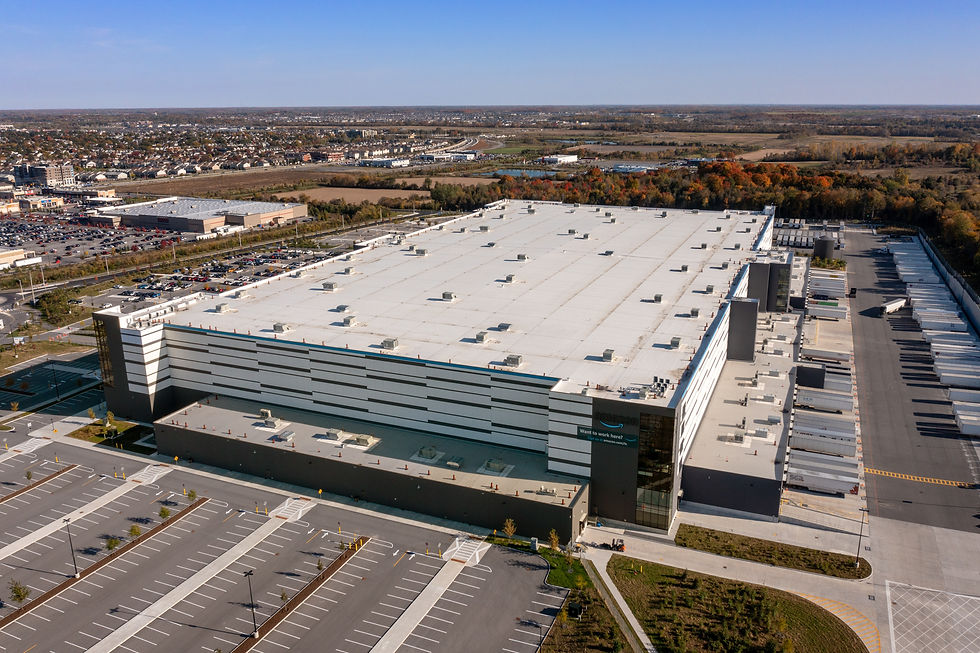
A customer owned a building with over a million square feet and multiple tenants. They had existing plans for individual suites, rent rolls, and what they thought was reliable square footage data. But the original full-building documentation dated back to the 1980s.
We came in to perform a full building scan and produce a graphic site plan. When we compared our LiDAR measurements to the square footage they had been using, the numbers didn't match. Some suites were off by as much as 10%.
That discrepancy had real consequences. They were potentially exposed to legal liability for charging tenants incorrect prices per square foot. On top of that, we identified approximately 20,000 square feet of undocumented space they hadn't been accounting for at all. Space they weren't charging for.
The total impact? A costly oversight that ran into the hundreds of thousands of dollars.
This is exactly why LiDAR doesn't lie. It doesn't estimate, it doesn't round, and it doesn't rely on a tape measure held by someone who was in a hurry. It captures what's actually there. Down to the millimeter.
If your building documentation is more than a few years old, or was never formally verified, you may be sitting on a similar problem without knowing it.
That project is a story, but the questions behind it come up on almost every building we scan. Here are the ones owners ask most.
Why would a building with existing plans still need a LiDAR scan?
Because existing plans are only as accurate as the day they were drawn — and most weren't field-verified. Tenant build-outs, demising-wall moves, and decades of renovations drift from the paper. A LiDAR scan captures the building as it actually stands today, down to the millimeter, so your documentation matches the physical reality you're leasing and billing against.
How do square footage errors actually cost building owners money?
Square footage drives rent. If a suite's recorded area is wrong, every rent calculation built on it is wrong too — either you're undercharging and leaving money on the table, or overcharging and exposed to tenant disputes and legal liability. On large multi-tenant buildings, a few percent of error across many suites compounds into a six-figure problem fast.
How much square footage can old documentation actually be off by?
More than most owners expect. On a recent million-square-foot scan, individual suites were off by as much as 10%, and roughly 20,000 square feet of usable space had never been documented or billed at all. The older and less-verified the original drawings, the wider the gap tends to be — especially after years of unrecorded tenant changes.
How accurate is a LiDAR scan compared to the original plans?
LiDAR measures the building as-is, to the millimeter, with no estimating, rounding, or human tape-measure error. Instead of trusting a number drawn decades ago, you get a verified point cloud of the actual structure. That accuracy is what turns "we think it's about this many square feet" into documentation you can lease, bill, and defend with confidence.
When should a building owner get an updated as-built scan?
Any time your documentation is more than a few years old, was never formally verified, or predates significant tenant work. The clearest triggers are before refinancing, before selling, before a new lease cycle, or after major renovations. If you can't point to when your square footage was last field-verified, that's the signal it's time.
Not sure your numbers are right? A single LiDAR scan replaces guesswork with field-verified certainty across Dallas, Fort Worth, Plano, Frisco, Allen, McKinney, Irving, Arlington, and Wylie. Request a quote and book online for 5% off — or call (945) 276-9626.


Comments